OVERVIEW OF THE SCIENTIFIC SEMINAR “STRATEGIC MODEL FOR BUILDING R&D CAPACITY AND PARTICIPATING IN THE GLOBAL VALUE CHAIN FOR VIETNAM’S SEMICONDUCTOR INDUSTRY”: FROM STRATEGIC ASPIRATION TO THE “5-STAKEHOLDER” IMPLEMENTATION ARCHITECTURE
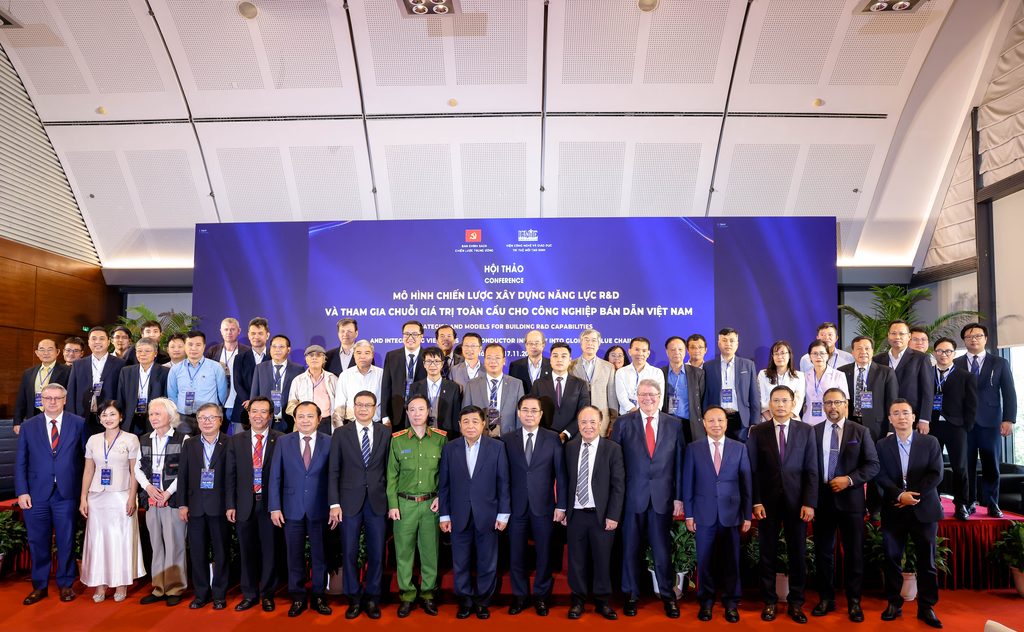
On 17 November 2026, at the National Convention Center (Hanoi), the Central Policy and Strategy Commission, in coordination with the Institute of Generative Intelligence Technology and Education (IGNITE Institute), solemnly held a national scientific conference with international participation: “Strategic Model for Building R&D Capacity and Participating in the Global Value Chain for Vietnam's Semiconductor Industry”. Bringing together more than 200 delegates, including leaders and former leaders of the Party and State, leaders of ministries, agencies, sectors and localities, as well as scholars and leading technology corporations from Vietnam, the United States, the Russian Federation, the Federal Republic of Germany and Australia, the Conference worked throughout the day with 01 keynote report, 12 in-depth presentations, 01 Policy Dialogue session “Proposals for the Nation” and 03 Roundtable thematic sessions, aimed at addressing the biggest challenge today: transforming strategic orientations into endogenous R&D capacity and commercial products.
1. The imperative to transform policy into endogenous technological capability and 04 major problems posed for the Workshop
The workshop took place against the backdrop of the global semiconductor industry experiencing explosive growth (forecast to reach USD 1.65 trillion in 2026 and USD 2.1 trillion in 2027) and becoming the “physical core” determining the competitiveness of all strategic technologies, from artificial intelligence (AI), big data, and 5G/6G telecommunications to quantum technology and defence and security. Attending the workshop were Comrade Nguyen Chi Dung – former Member of the Party Central Committee and former Deputy Prime Minister; Comrade Nguyen Hoang Giang – Member of the Party Central Committee and Deputy Head of the Central Policy and Strategy Commission (Chair of the Workshop); Comrade Le Xuan Dinh – Deputy Minister of Science and Technology; Comrade Le Tan Can – Deputy Minister of Finance; Comrade Nguyen Tuan Hung – Deputy General Director of the Vietnam News Agency; Major General Nguyen Ngoc Cuong – Director of the National Data Center (Ministry of Public Security); Comrade Nguyen Hong Hien – Director General of the Department of Science, Technology, Innovation and Digital Transformation (Central Policy and Strategy Commission); Comrade Nguyen Thi Thu Ha – Head of the Economic Department of Nhan Dan Newspaper; Assoc. Prof. Dr. Nguyen Ai Viet – Director of the IGNITE Institute and Member of the National Advisory Council on Science, Technology, Innovation and Digital Transformation Development (Co-chair of the Workshop); along with representatives from embassies, research institutes, universities and technology corporations.
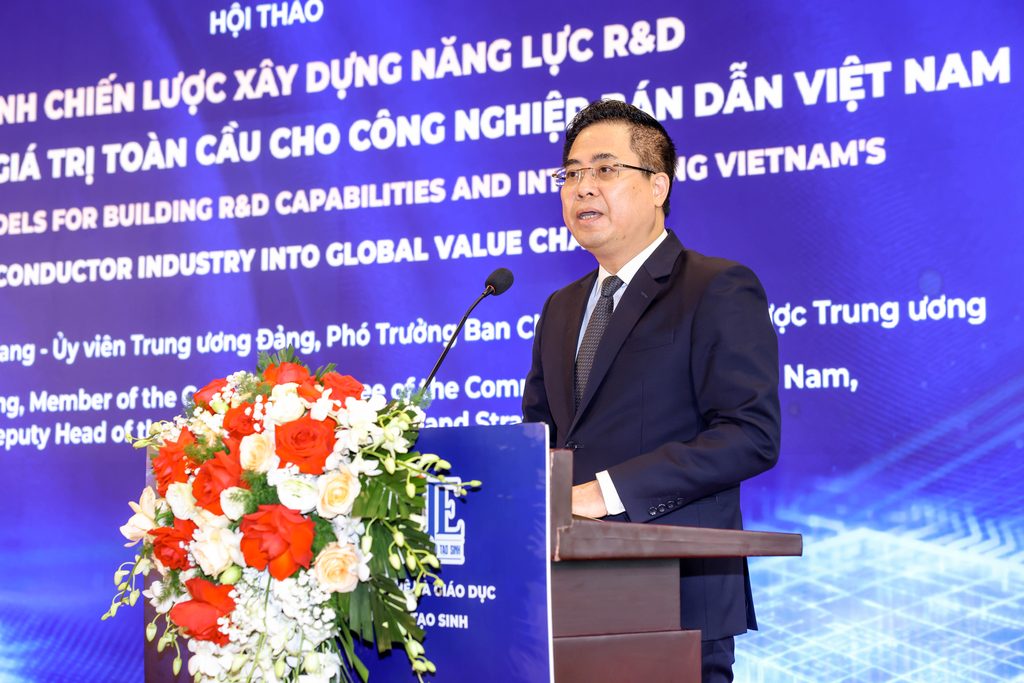
Delivering the opening remarks and directing the Workshop, Comrade Nguyễn Hoàng Giang – Member of the Party Central Committee, Deputy Head of the Central Policy and Strategy Commission – emphasized: in recent times, the Party and the State have issued a system of extremely important strategic guidelines, notably Resolution No. 57-NQ/TW of the Politburo on breakthrough development of science, technology, innovation and national digital transformation, and especially Resolution No. 19-NQ/TW dated July 28, 2026 of the 14th Party Central Committee on renewing Vietnam’s development model (on the basis of the Project researched and advised by the Central Policy and Strategy Commission as the lead agency). Thoroughly grasping the direction of General Secretary Tô Lâm on choosing the right priority orientation, closely linking research with production and creating products of substantive value, Comrade Nguyễn Hoàng Giang proposed that the Workshop focus on frank discussion of four key groups of issues: (1) Substantively assessing Vietnam’s R&D capacity, competitive advantages and bottlenecks in the global semiconductor value chain; (2) Specifying solutions for organizing policy implementation to translate goals into measurable products; (3) Establishing an R&D organizational model and effectively operating the “five-partner” linkage ecosystem; and (4) Shaping a vision and a specific priority roadmap for the next 5, 10 and 20 years.
2. Identifying 06 Implementation Gaps, New Policy Instruments and International Lessons “Beyond the Cleanroom”
Presenting the keynote report “Strategy and Development Model for Vietnam's Semiconductor Industry” and the in-depth paper on “Semiconductor Innovation Ecosystem and the Five-Stakeholder Model”, Assoc. Prof. Dr. Nguyen Ai Viet – Director of the IGNITE Institute, analyzed the C = SET + 1 strategic structure (under Decision No. 1018/QD-TTg) and the targets for 2030 (100 design enterprises, 01 small-scale fabrication plant, 10 packaging – testing plants, semiconductor revenue of over USD 25 billion/year, and the training of 50,000 engineers under Decision No. 1017/QD-TTg). Based on practical surveys conducted ahead of the Workshop, the Director of the IGNITE Institute highlighted 06 implementation gaps hindering the transformation of “Resources” into “Capabilities”: the gap in the priority product portfolio; the coordinating entity with end-to-end accountability; the mechanism for mobilizing R&D teams; shared laboratory infrastructure; funding from prototyping to scale-up; and, in particular, the gap concerning the first customer (First Customer) and international conformity standards.
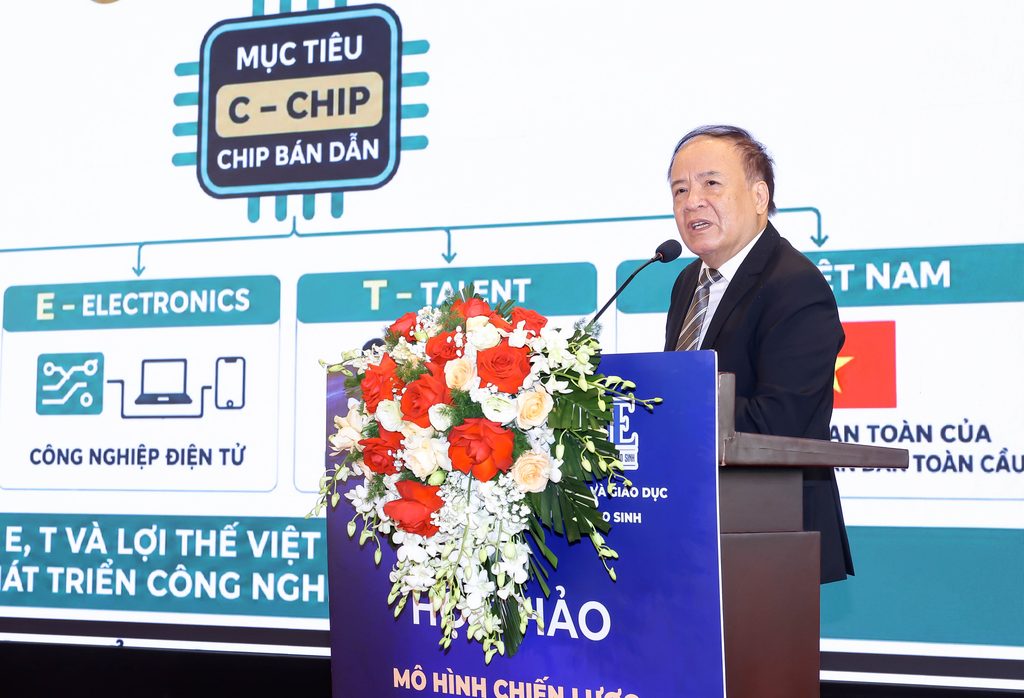
“Technology is not the final destination; technology is only the starting point, while the destination of the nation must be a complete industry that generates economic growth. To transform fragmented resources into substantive capability, we must upgrade from the traditional 3-actor model to the 5-actor model — placing the Scientist as the direct creative subject and adding the Innovation Infrastructure Developer, such as the Technology Innovation Center (TIC), as a closed-loop engine from training, R&D, creation of intellectual property (IP) assets to product commercialization and reinvestment.”
— Assoc. Prof. Dr. Nguyễn Ái Việt, Director of the Institute for Generative New Intelligence Technology and Education (IGNITE Institute)
From the perspective of a state management agency, Deputy Minister of Science and Technology Le Xuan Dinh announced strong policy moves to remove three core bottlenecks (excessively high costs of R&D infrastructure and pilot production; a shortage of Chief Engineers and Lead Engineers; and delays in the public finance mechanism). The Deputy Minister emphasized an enterprise-centered orientation (research institutes and universities as the supply of knowledge; enterprises as the demand for technology), applying a lump-sum funding mechanism tied to the final product based on evaluation milestones and exemption from liability for objective risks. In particular, in implementing Decision No. 1483/QD-TTg (August 2026) on shared strategic technology laboratories, the Ministry of Science and Technology has established a 100-point scoring scale in which the human factor (leading research personnel) carries the highest weight, followed by the accompanying R&D project, and only then fixed equipment. At the same time, under Decree No. 260/2026/ND-CP guiding the Law on High Technology, the State supports up to 100% of the cost of semiconductor chip testing both domestically and internationally, has put into operation the National Center for Supporting Semiconductor Chip Trial Production (VNMPW/CC), and for the first time applies a remuneration level for Chief Engineers and leading scientists of up to VND 300 million per month — equivalent to the expert standard of Singapore's A*STAR.
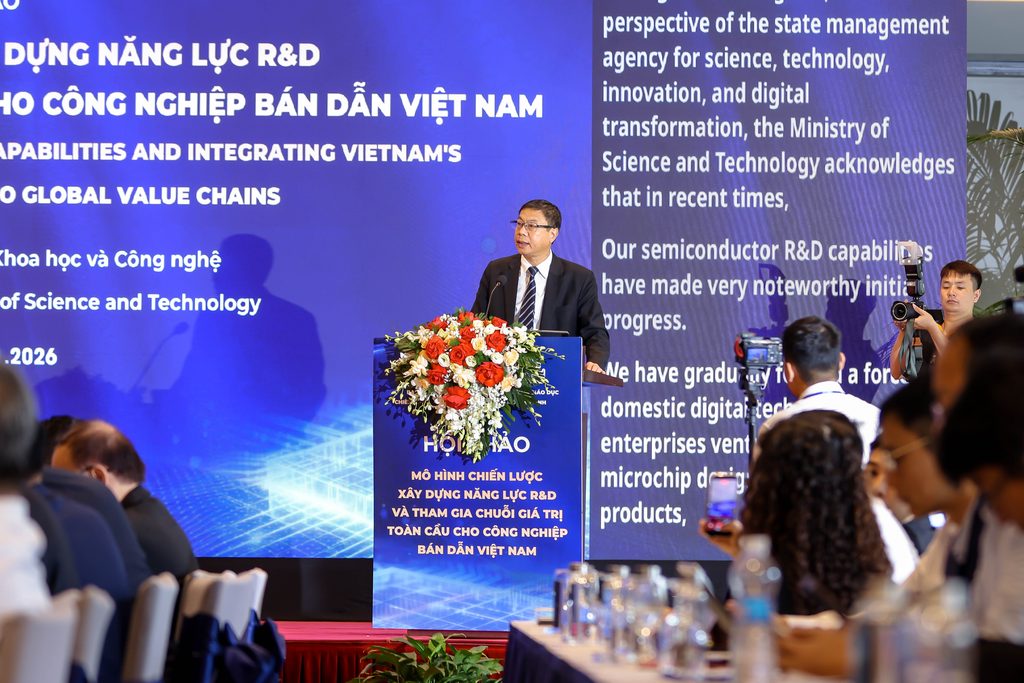
Outlining the domestic R&D landscape as of November 2026, Assoc. Prof. Dr. Nguyen Tran Thuat, Director of the Institute for Semiconductors and Advanced Materials (Vietnam National University, Hanoi) and Member of the Scientific Council of the IGNITE Institute, reviewed Vietnam's more than 60-year semiconductor history (from the germanium transistor in 1962 by the late Prof. Dam Trung Don and the Z181 production line in the 1980s, which was disrupted when the SEV market was lost) through to the new advances in 2026: Viettel breaking ground on a 27-hectare, 32 nm process chip fabrication plant in Hoa Lac (on 16 January 2026) and, together with the Government Cipher Committee, announcing the VGC v1.0 security chip on a 28 nm process integrating ~300 million transistors on the RISC-V architecture (on 3 November 2026); the power, AI, and MCU/ADC chip lines of FPT Semiconductor, Hyphen Deux, and CT Group; and the emergence of domestic packaging – testing facilities such as FPT Advanced Testing, CT Semiconductor, and VSAP Lab alongside the FDI bloc (Intel, Amkor, Hana Micron, Coherent, Tokuyama). Assoc. Prof. Dr. Nguyen Tran Thuat proposed developing Hoa Lac into a Semiconductor R&D Competitiveness Cluster operating under the Hub – Spokes – Living Lab model.
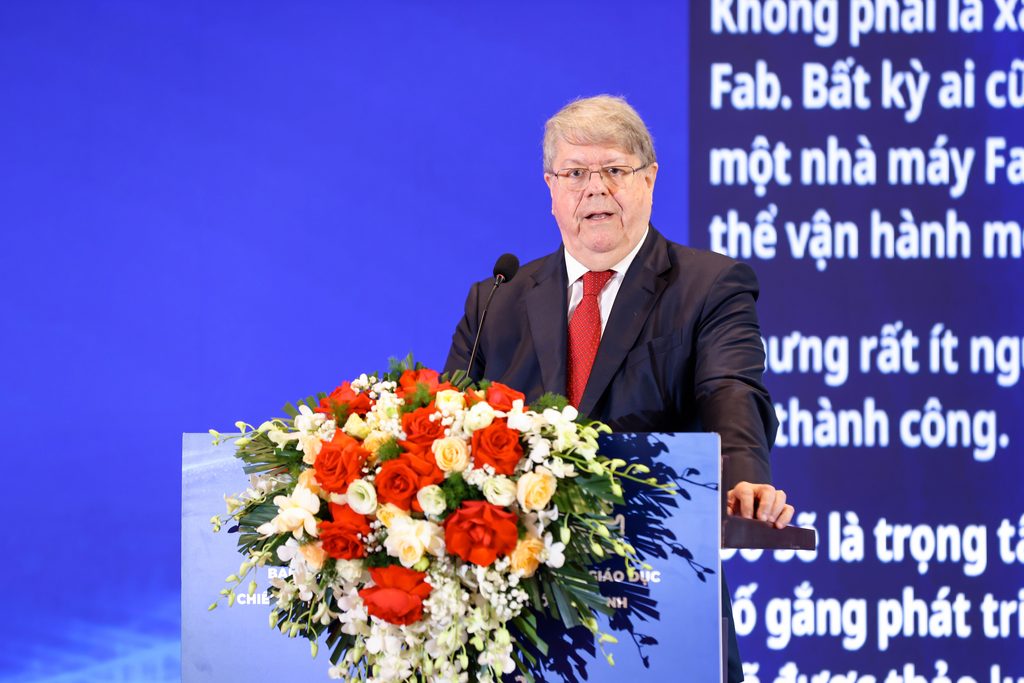
Bringing profound insights from within the global semiconductor value chain, Dr. Richard L. Thurston – Chairman and Chief Executive Officer of Great Lakes Semiconductor (USA), former Senior Vice President and General Counsel of TSMC, and Member of the Strategic Advisory Board of the IGNITE Institute – presented the paper “Beyond the Cleanroom: Opportunities for Vietnam to Participate in the Global Semiconductor Value Chain”. Through the real-life story of Apple CEO Tim Cook explaining to TSMC Founder Morris Chang that the factor that led Apple to choose TSMC was not only the cleanroom but also its capacity for sustainably profitable operations and absolute confidentiality, together with the costly legal lesson from the lawsuit over the theft of 12.5 Terabytes of trade secrets in the early 2000s, Dr. Richard L. Thurston affirmed that Vietnam must immediately complete its legal framework for the protection of Trade Secrets. He recommended that Vietnam should not plunge into the cyclically risky race for commodity memory chips (DRAM/NAND) or expensive mega-fabs, but should instead focus on mature processes (Mature Nodes of 28–65 nm, which account for millions of components in each AI data center and defense system), develop the “Pocket Fab / Mini-Fab” model combined with AI tools to shorten chip design to under 30 days, 3D advanced packaging, and the “From Dirt to Chip” strategy. Continuing this line of thinking on integration, Ambassador Dr. Ngo Duc Manh – former Ambassador of Vietnam to the Russian Federation and Member of the Scientific Council of the IGNITE Institute – clarified the new connotations of “Technology Diplomacy” under the Documents of the 14th National Congress and Resolution 57-NQ/TW, leveraging the network of 28 Strategic Partners (including 16 Comprehensive Strategic Partners) to transform diplomatic trust into endogenous technological assets.
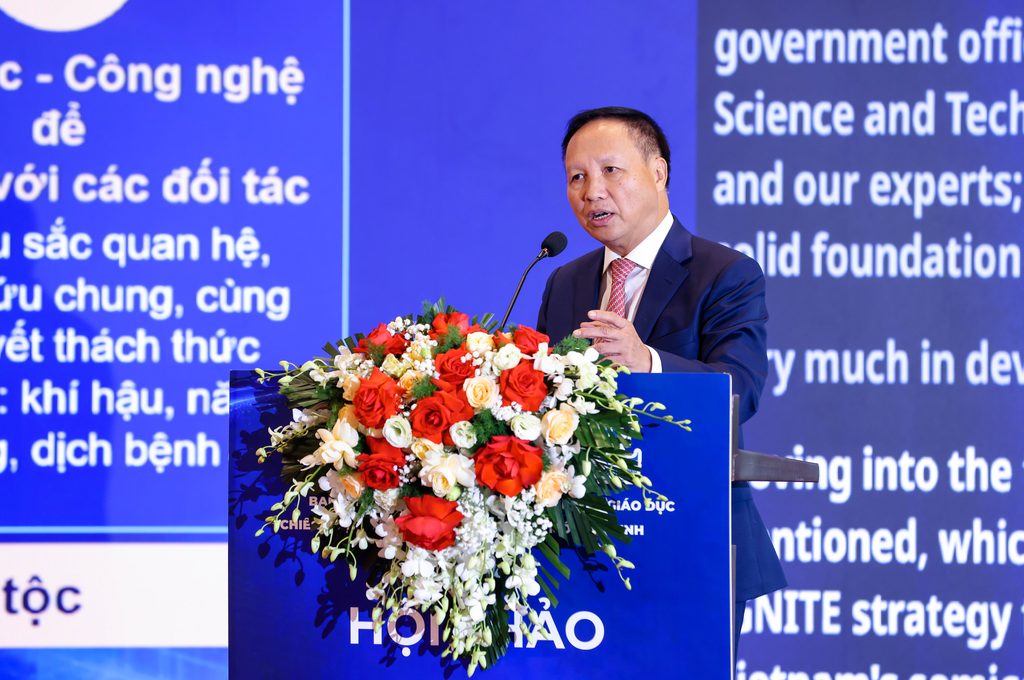
3. Vibrant Policy Dialogue Session: 07 Direct Proposals for the Next 5-Year Roadmap
Under the co-chairmanship of Comrade Nguyễn Hoàng Giang and Deputy Minister Lê Xuân Định, and the incisive moderation of Assoc. Prof. Dr. Nguyễn Ái Việt, following the principle “each expert contributes one core recommendation in 3 minutes”, the late-morning Policy Dialogue Session recorded 07 highly practical recommendations:
• Prof. Dr. Tran Xuan Hoai (Member of the Scientific Council of IGNITE Institute, former Director of the Institute of Applied Physics and Scientific Instruments – VAST): Recalling the lesson of 1976, when Vietnam successfully developed Planar Epitaxy technology and manufactured silicon transistors at the same time as Samsung but was interrupted after 1991, the Professor recommended that national policy shift the social mindset from “a preference for short-term commerce” to restoring a culture of experimental engineering and producing substantive industrial products.
• Dr. Nguyen The Hung (IGNITE Institute Expert, former Principal Researcher at the Institute of Physics – VAST): Proposes a materials roadmap to generate cash flow within just 1–2 years: instead of waiting to refine silicon to 9N–10N purity for wafer production, refine silica from rice husk ash in the Mekong Delta to 3N purity (99.9%), combined with carbon/graphite from Mau A (Yen Bai) at the TIC Center, to produce Silicon–Carbon anode materials for supply to energy storage battery systems (USD 40–60 million per system) of global AI data centers as early as 2027–2028.
• Prof. Dr. Nguyễn Toàn Thắng (Former Director of the Institute of Physics – VAST): Recommends that the State act as a “Strategic Client”, selecting 5–7 core chip lines from the list in Decision 21/2026/QĐ-TTg to commission for development over 2–3 years, already linked to specific end-user enterprises; and at the same time centrally plan training laboratories and strictly control output standards for Bachelor’s, Engineer’s, Master’s, and Doctoral degrees in semiconductors.
• Dr. Võ Trí Thành (Director of the BCSI Institute, former Deputy Director of the CIEM Institute): His analysis shows that the Industrial Cluster model requires Leading Firms; he recommends a strong shift toward Demand-side policies to stimulate technology demand, so that corporate R&D investment becomes more advantageous than flying to Guangdong to purchase off-the-shelf technology, while also linking this with the “Vietnam Go Global” Program (issued on April 4, 2026) to support Vietnamese enterprises in carrying out M&A transactions involving foreign technology companies.
• Dr. Nguyễn Quốc Hưng (Director of the Institute of Quantum Technology – VNU, Member of the Scientific Council of IGNITE Institute): Emphasized that the convergence of AI and Quantum Technology is restructuring the entire global hardware landscape, similar to the Computer Science turning point of the 1990s, opening a “strategic gap” for the team of young Vietnamese scientists to advance directly into next-generation chip architectures with high added value.
• Comrade Nguyen Vu Ha (Deputy General Director of Viettel Group): Affirmed that no country in the world has fully mastered 100% of a closed semiconductor supply chain; recommended that Vietnam focus its resources on its core strength in integrated circuit design human resources, delving deeper into architectural design and circuit schematics (schema), and mastering international tool workflows.
• Dr. Hoàng Xuân Hiển (Member of the Research & Advisory Board of IGNITE Institute, Lecturer at Electric Power University): Proposes prioritizing investment in developing Micro-Electro-Mechanical Systems (MEMS – micro-sensors serving as the “five senses” and actuators serving as the “hands and feet” of autonomous, medical, aviation, and defense equipment) with a factory investment cost only 1/30 that of a CMOS chip manufacturing plant.
4. Afternoon Session “From Strategy to Action”: Real-World Practices from Businesses, Localities, Universities, and International Venture Capital Funds
That same afternoon, moderated by Assoc. Prof. Dr. Nguyen Ai Viet (Director of the IGNITE Institute) and MSc. Nguyen Hong Hien (Director General of the Department of Science, Technology, Innovation and Digital Transformation, Central Policy and Strategy Commission), the workshop delved into three practical roundtable topics. Opening the session on enterprises and localities, Mr. Tran Kim Chung – Chairman of CT Group – shared the strategy for developing specialized chip lines serving the low-altitude economy (highlighted by the “Compliance Chip” for managing millions of UAVs and a 12-bit 20 MSPS ADC chip), and announced the project to build a Gallium Nitride (GaN) compound semiconductor photolithography plant covering 15,000 m² with a capacity of 4,000 8-inch wafers per month (with investment capital only about 1/100 that of a silicon mega-factory, while the industry is growing at up to 35% per year and payback is expected within four years). Next, Dr. Nguyen Thi Bich Yen – Chairwoman of the Board of Directors of VSAP Lab Joint Stock Company and Member of the National Advisory Council (with over 45 years of international semiconductor experience) – and Mr. Le Hoang Phuc – Director of External Affairs and Business Development at VSAP Lab and former Director of the DSAC Da Nang Center – shared practical experience in building the advanced packaging “Lab-Fab” model (with an investment of USD 72 million in Da Nang, a roadmap to begin CoS/CoW operations by the end of 2026 and advance to CoWoS by the end of 2027, and the development of technology for integrating passive components into the RDL layer and low-temperature silicon wafer debonding), along with Da Nang’s “1–3–5” policy model (a five-year personal income tax exemption, budget-funded investment in laboratory infrastructure and free premises for 44 startups at Software Park No. 2, and on-the-job training that helped Marvell’s Da Nang office double to 80 engineers).
In the thematic session on R&D Capacity, Laboratories and Human Resource Development, Mr. Thai Tran – Senior Manager of Monitoring and Evaluation (M&E), Arizona State University (ASU, USA) in Vietnam, summarized 16 years of university cooperation in Vietnam (over USD 67 million in investment, the first 24 ABET-accredited programs), introducing a workforce architecture spanning four competency domains, the Stackable Microcredentials system (four levels L1–L4) under the DSSC Program, and the Hanoi–ASU Cooperation Framework (March 2026). Assoc. Prof. Dr. Ha Thuc Vien – Vice Rector of the Vietnamese-German University (VGU) shared the German-standard research university model with 72 laboratories, a roadmap to train 500 elite semiconductor engineers/master's graduates to be sent for 6–12-month internships at TU Darmstadt, the University of Stuttgart and TU Chemnitz, recommending accelerating the approval and disbursement of public investment and transitioning to the Living Lab model governed by 10 KPI indicators. From the perspective of an academic research institute, Assoc. Prof. Dr. Tran Quoc Tien – Deputy Director of the Institute of Materials Science (IMS – VAST) introduced the capabilities of the National Key Laboratory for Materials and Electronic Devices (559 international publications, 33 patents, and Vietnam's only HRTEM microscope system) and positioned the Institute as a “Problem Solver” addressing three challenges for enterprises: micro-failure analysis, thermal management materials, and optoelectronic devices / high-power compound semiconductors.
In particular, Roundtable Discussion Sessions 1 & 2, moderated by Prof. Dr. Sc. Từ Trung Chấn (Member of the Scientific Council of IGNITE Institute), were held in a highly vibrant atmosphere, revolving around four clusters of issues: the trend of the global value chain shifting toward the packaging integration stage and the heat dissipation challenge at power densities of several kW/mm² for AI chips; the application of Lean Thinking (20/80) and Institutional Economics, and the role of intermediary organizations for “Technology Translation – Business Matching” (such as IGNITE Institute and the TIC project) in overcoming the disconnect between academia and enterprises; the mechanism for clearly separating professors’ research rights from the professional engineering team responsible for operating and commercializing laboratories to eliminate the “ivory tower” and “equipment possession” mindsets in Shared Laboratories; and the social momentum behind achieving the goal of 50,000 semiconductor engineers.
At Roundtable Session 3 on "Innovation Districts and Investment Attraction", Prof. Dr. Sc. Alexander Yu. Drozdov – Founder and CEO of Optimizing Technologies, Founder of Sirius Semiconductor in Vietnam, Professor at the Moscow Institute of Physics and Technology (MIPT), and former General Director of Intel's R&D Center in the Russian Federation – shared his 38 years of experience in microprocessor design (Elbrus, Intel, Soft Machines) and proposed the "National Processor Core Strategy for Vietnam" based on the open RISC-V ecosystem, combined with automated instruction-set-customized EDA tools (accelerating design speed by 10 times), optimized compilers, and binary translation. Mr. Le Hoang Hoan – Chairman of the Board of Directors of Dat Viet Group and Chairman of the Board of Directors of Roboworld Group – analyzed eight prerequisite infrastructure conditions for semiconductor investors and the planning transition from high-tech industrial parks to innovation districts (with six components beyond factories, illustrated by the 496.1-hectare Hung Yen High-Tech Park under Decision No. 1499/QD-TTg dated August 6, 2026, and the 1,081-hectare Hue High-Tech Park). Concluding the presentations, Mr. Sergei Sergienko – Founder and CEO of Chrono.tech and Co-founder of MHC Digital Finance (Australia) – shared the research commercialization model of Australia's National Science Agency (CSIRO / Main Sequence — the inventor of Wi-Fi technology and polymer banknotes), the Sidecar Funds model of the State of Victoria, and proposed establishing a corridor connecting international experts and venture capital with a 12–24-month roadmap (beginning with a 90-day pilot design Sprint).
Delivering the summary and closing remarks at 17:32, Assoc. Prof. Dr. Nguyen Ai Viet, Director of the IGNITE Institute, highly appreciated the Workshop’s rare candid and substantive academic quality and announced three concrete outputs: (1) A policy recommendation report to be submitted to the Party and State leaders; (2) A bilingual Vietnamese–English full-text Proceedings publication; and (3) Practical cooperative action programs to be implemented immediately after the Workshop by the IGNITE Institute together with ministries, agencies, localities, enterprises, and the international expert network.
Nổi bật

IGNITE INSTITUTE CONDUCTS A FACT-FINDING VISIT TO THE STATE AUDIT OFFICE OF VIETNAM ON THE IMPLEMENTATION OF RESOLUTION NO. 57-NQ/TW

IGNITE SEMINAR - JANUARY
2025 ACTIVITY REVIEW AND 2026 STRATEGIC ORIENTATION

IGNITE SEMINAR | TECHNOLOGICAL SOLUTIONS FOR REDUCING THE COST OF ALGAL-BASED BIOFUELS IN VIETNAM
IGNITE SEMINA | TECHNOLOGICAL SOLUTIONS FOR REDUCING THE COST OF ALGAE-BASED BIOFUELS IN VIETNAM
Tin liên quan
IGNITE INSTITUTE AND GREAT LAKES SEMICONDUCTOR (USA) SIGN STRATEGIC COOPERATION MEMORANDUM OF UNDERSTANDING ON TECHNOLOGY, INNOVATION AND SEMICONDUCTOR INDUSTRY DEVELOPMENT
IGNITE INSTITUTE WORKS IN BAC NINH CITY: PROMOTING COOPERATION IN HIGH-TECH AND SEMICONDUCTOR INDUSTRY DEVELOPMENT
IGNITE INSTITUTE WORKS WITH HUNG YEN PROVINCIAL PEOPLE'S COMMITTEE: OPPORTUNITY FOR STRATEGIC CONSULTING COOPERATION ON TECHNOLOGY DEVELOPMENT AND INNOVATION ECOSYSTEM
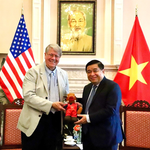
DR. RICHARD L. THURSTON – FORMER SENIOR VICE PRESIDENT OF TSMC – AND HIS STRATEGIC PERSPECTIVE ON VIETNAM'S OPPORTUNITIES IN THE GLOBAL SEMICONDUCTOR VALUE CHAIN